
Traumatic Shoulder Pain With an Atypical Limb Position
Case Details
Relevant Clinical History
A 55-year-old patient presented following a fall from a pavement, complaining of right shoulder pain with the arm positioned overhead on arrival. She was intoxicated due to alcohol overdose, limiting the reliability of her history and examination.
Clinical Examination
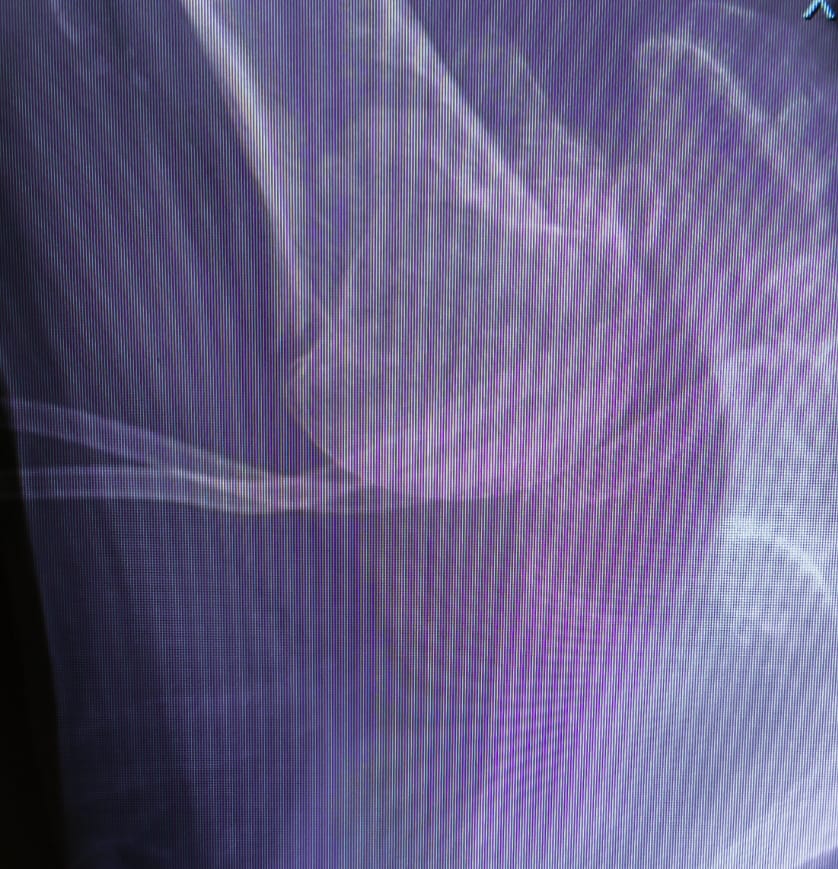
The hallmark clinical finding was the arm held in full abduction, typically between 110° and 160°, giving the classic “arm held overhead” or “erect” posture seen in inferior shoulder dislocation (luxatio erecta). The patient was unable to actively lower the arm, and the limb remained fixed in this elevated position, as if she were continuously reaching overhead or signalling for attention.
On palpation, the humeral head was felt in the axilla or along the lateral chest wall, presenting as an abnormal prominence consistent with inferior displacement of the humeral head.
Investigations
-
X-ray of the shoulder (AP and axillary/lateral views) to confirm the diagnosis of inferior glenohumeral dislocation (luxatio erecta) and assess for associated fractures.
-
CT angiogram if there is any concern for vascular injury, particularly to the axillary artery, which is at risk due to the extreme abduction and inferior displacement of the humeral head.
Treatment & Procedures
The patient underwent manipulation and reduction under general anaesthesia. Although initial consideration was to attempt reduction under conscious sedation, the decision was made to proceed to theatre due to the presence of a fracture associated with the inferior shoulder dislocation, necessitating a safer and more controlled environment for reduction.
Figures
Self-Test Questions
Most common mechanism of injury?
Suggested Answer & Explanation:
The mechanism of injury typically involves high-energy trauma that forces the arm into extreme hyperabduction. In this position, the humerus is levered sharply against the acromion, causing the inferior capsule and supporting ligamentous structures to tear. This disruption allows the humeral head to displace inferiorly and become trapped beneath the glenoid fossa, resulting in a position from which spontaneous reduction is not possible.
What are the most Common Associated Injuries
Suggested Answer & Explanation:
Inferior glenohumeral dislocation is frequently accompanied by significant soft-tissue, neurological, and bony injuries due to the violent hyperabduction mechanism. Commonly reported associated injuries include:
1. Bony Injuries
-
Greater tuberosity fractures – ~37%
Caused by avulsion forces from the rotator cuff as the humeral head is displaced inferiorly. -
Proximal humerus fractures
Particularly surgical neck fractures due to traction and impaction.
2. Rotator Cuff Injuries – ~12%
Tears result from sudden traction forces applied to the rotator cuff tendons during extreme abduction. Risk increases with age.
3. Neurological Injuries – up to 60%
-
Most commonly axillary nerve neuropraxia
-
May involve brachial plexus traction injuries (upper trunk predominance)
These usually resolve but require follow-up.
4. Capsulolabral Injuries (Common and Often Severe)
The anterior capsule and labrum often sustain major damage.
Typical findings include:
-
Bankart lesions – avulsion of the anteroinferior labrum
-
Anterior capsular tears
These injuries significantly contribute to persistent instability if not recognised and managed appropriately.
5. “Buttonholing” of the Humeral Head
A particularly difficult complication is buttonholing, where the humeral head herniates through a capsular tear.
-
The capsular edges tighten around the humeral neck,
-
Preventing the humeral head from returning to its anatomical position
-
Closed reduction becomes extremely difficult or impossible, often requiring open surgical reduction
describe different technique for reduction particularly in luxation erecta?
Suggested Answer & Explanation:
1. Two-Step Technique (Nho et al.)
This method is widely accepted due to its clear biomechanical rationale and high success rate. It restores normal anatomy through two sequential manoeuvres:
Step 1: Convert the Inferior Dislocation to an Anterior Dislocation
With the patient adequately sedated, the clinician grasps the mid-humeral shaft and applies a gentle anterior force, while simultaneously lifting the elbow cephalad.
This manoeuvre elevates the humeral head from its inferior position and pivots it anteriorly, effectively converting the luxatio erecta into a standard anterior shoulder dislocation.
Step 2: Reduce the Anterior Dislocation
Once in an anterior position, reduction follows established principles.
The arm is slowly adducted toward the body while applying gentle external rotation.
A firm, characteristic “clunk” is usually felt as the humeral head re-enters the glenoid fossa, completing the reduction.
2. Traction–Countertraction Technique
This is a widely used and reliable method, particularly when adequate sedation is available.
Technique
-
The patient lies supine.
-
The operator or assistant applies steady axial traction to the abducted arm, typically by holding the forearm or wrist.
-
Countertraction is applied using a folded sheet wrapped across the patient’s shoulder and thorax, pulled in the opposite direction by a second assistant.
Key Principles
-
Traction must be slow, continuous, and sustained, often for several minutes.
-
This allows the muscles to fatigue and relax, facilitating reduction.
-
Jerky or forceful movements should be avoided, as these increase the risk of neurovascular injury or fracture.
3. Stimson Technique (Gravity-Assisted Reduction)
A gentle and elegant method that utilises gravity to achieve reduction with minimal manipulation.
Technique
-
The patient is positioned prone on a stretcher or table.
-
The affected arm hangs freely over the edge.
-
Weights (5–10 kg) are attached to the wrist or forearm to provide continuous downward traction.
Mechanism
Over 20–30 minutes, gradual muscle fatigue occurs, allowing the humeral head to slide back into the glenoid socket under gravity alone.
This method is ideal when sedation is limited or when a low-force, atraumatic approach is preferred.
Outcome and Case Discussion
The patient underwent manipulation and reduction under general anaesthesia, which successfully restored the glenohumeral joint to its anatomical position. Prior to proceeding with MUA, a CT angiogram was appropriately performed to assess for potential axillary artery injury, given the high risk of neurovascular compromise associated with inferior shoulder dislocations (luxatio erecta). No vascular injury was identified.
Post-reduction imaging confirmed satisfactory alignment. An associated fracture was identified and managed conservatively, as it remained stable following reduction and did not require operative fixation. Neurovascular status improved after reduction, and the patient was monitored with regular follow-up examinations.
This case highlights the importance of:
-
Performing careful pre-reduction vascular assessment (including CT angiography when indicated)
-
Considering GA for safer, controlled reduction, especially when fractures are present
-
Recognising that associated fractures can often be treated conservatively if alignment is stable post-reduction
Overall, timely recognition, appropriate imaging, and controlled reduction under GA led to a successful outcome without complication.
Summary of Learning Points
-
Early recognition of vascular and neurological injury is essential, as inferior shoulder dislocation carries a high risk of neurovascular compromise.
-
A coordinated multidisciplinary approach (ED, orthopaedics, radiology, anaesthetics) optimises patient safety and decision-making.
-
Urgent reduction is critical, as delayed management increases the risk of permanent neurological deficits and prolonged functional impairment.
References
Wolf O, MD, Ekholm C. Luxatio erecta of the humerus: the spectrum of injury of inferior shoulder dislocation and analysis of injury mechanisms. JSES Reviews, Reports, and Techniques. Volume 2, Issue 4, November 2022, Pages 497-504
My answers were shorts,put your answer was complete and good describing.
Thank you Dr.Khaled,
Please consider submitting cases to the journal
I will also share a case